She Can't Draw a Stick Figure — So How Is She Making $60k a Year Off Clipart? Inside One Ohio Mom's Vinyl-and-Buttercream Empire
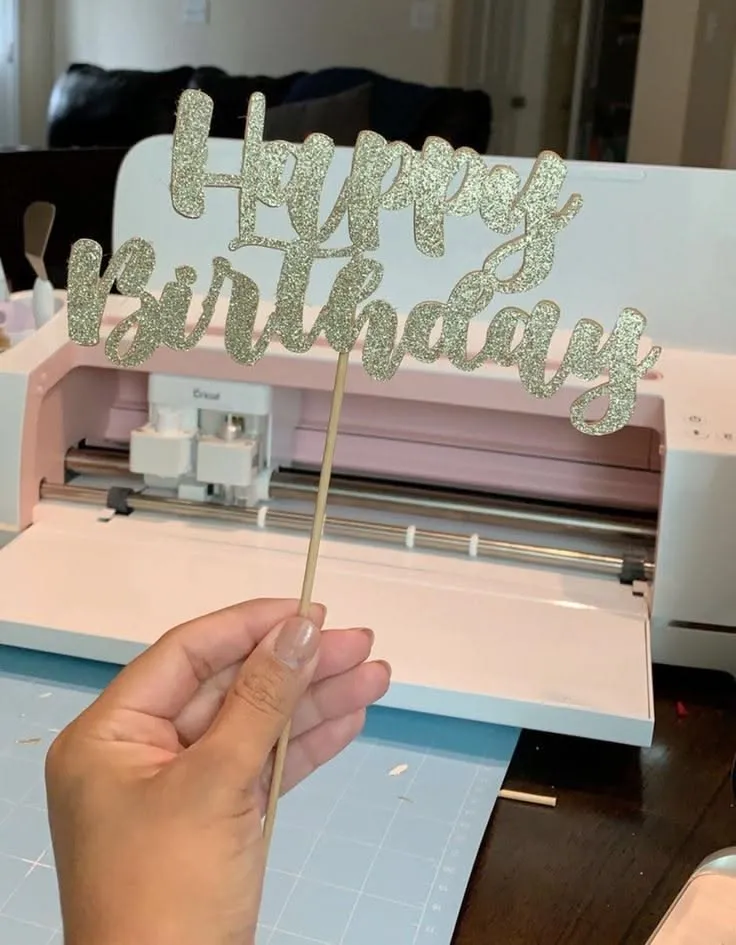
Photo: woman crafting cake toppers with Cricut cutting machine at home table, via i.pinimg.com
Dana Whitfield's dining room table in suburban Columbus, Ohio, has seen a lot of buttercream. It's also where she runs a business that cleared roughly $60,000 last year — selling cake toppers, vinyl decals, and birthday t-shirts built almost entirely from clipart she never drew.
"People assume you have to be an artist," she told us over a phone call sandwiched between school pickup and a church bake sale order. "I'm not. I can't draw. What I can do is find good graphics, read a license, and operate a Cricut."
That combination, it turns out, is a legitimate business model — and a surprisingly accessible one. Here's how it actually works, with her real numbers.
The Setup: Buying Art She Can Legally Sell
Dana's inventory starts as commercial-use clipart: bundles from designers on Creative Market, Design Bundles, and the occasional Etsy listing with a clear commercial license. She budgets about $150 a month for graphics — her single biggest supply cost besides vinyl itself.
The key phrase she looks for in every license is "commercial use, physical products allowed." Some licenses cap units (often 100–500 items per design), some prohibit print-on-demand, and some require attribution. Dana keeps a spreadsheet: design name, source, purchase date, license terms, units sold.
"The spreadsheet is boring," she admits. "It's also the reason I sleep at night."
She avoids free clipart for anything she sells. Not because free is always illegal — public domain and CC0 graphics can be fine — but because tracking provenance takes longer than spending $6 on a bundle with a paper trail.
What Actually Sells (and What Sits)
After three years, Dana's sales data tells a clear story:
Cake toppers are her workhorse. Birthday themes — dinosaurs, cow print, retro smiley faces — account for about 40% of revenue. Average price: $18–$28. Her record month was last March, when a Dr. Seuss-adjacent (but legally distinct) "Oh, the Places" style set moved 90 units.
T-shirts for group events — family reunions, bachelorette parties, teacher appreciation week — make up another third. These spike predictably: May for teachers, June through August for reunions, fall for bachelorette season.
Vinyl decals for tumblers and car windows round it out. Simple, single-color designs sell; intricate multi-layer ones don't, because cutting time eats the margin.
What flopped? Weddings ("too competitive, everyone's a wedding vendor") and anything holiday-adjacent past the season. "Christmas clipart sells in October. In December you're already too late."
The Real Cost Breakdown
Dana shared her 2024 numbers, which we've rounded:
- Graphics/licenses: ~$1,700/year
- Vinyl, cardstock, sticks, adhesive: ~$4,200/year
- Cricut and supplies (amortized): ~$800/year
- Etsy fees and shipping: ~$9,000/year
- Booth fees for 14 craft fairs: ~$1,100/year
Against roughly $60,000 in gross sales, she nets something in the neighborhood of $40,000 — for 25 to 30 hours a week during busy season, fewer in the summer. "It's not quit-your-job money yet," she says. "But it's car-payment-and-groceries money, made during nap time for three years."
The Licensing Rules That Keep Her Legal
This is where most aspiring makers get burned, so Dana's rules are strict:
- Never resell the clipart itself. Her products are physical goods — a topper, a shirt — not the digital file. Reselling or sharing graphics as-is violates virtually every commercial license.
- Transform the design. She adds names, dates, and layout work. "A cake topper with 'Emma — 6.14.25' on it isn't the clipart anymore. It's my product."
- Check for trademark traps. Dana runs every phrase through USPTO's trademark search before listing. "Fancy Like" and a few other pop-culture phrases are trademarked. Sellers get takedowns for this constantly.
- Save every receipt and license PDF. If Etsy or a designer ever questions a listing, documentation is the whole defense.
She also steers clear of anything resembling a trademarked character — no Mickey-shaped anything, no Pokémon silhouettes. "The clipart designer might've been careless. I'm not going to be careless too."
The Roadmap, Condensed
For readers eyeing her path, Dana's advice is almost disappointingly practical:
- Start with one niche (she picked cake toppers because the materials cost under $2 a unit).
- Spend $50 on licensed bundles from a marketplace with clear commercial terms — not on downloading free files of murky origin.
- Do two local craft fairs before touching Etsy. In-person feedback tells you fast what's worth listing online.
- Read every license twice. If it doesn't say commercial use, it isn't.
"The art was never the hard part," Dana says, laughing. "The hard part is reading the fine print and showing up to a craft fair at 6 a.m. with a folding table."
For a mom who can't draw a stick figure, that's turned out to be a pretty solid business plan.